

Curriculum & Teaching Methodology
At BGS GIDS, teaching goes far beyond the lecture hall. Our curriculum is designed to develop well-rounded dental professionals through a combination of theory, hands-on laboratory work, clinical practice, research engagement and professional development.
Teaching Methods

Didactic Lectures
Expert faculty-led lectures in air-conditioned lecture theatres equipped with modern audio-visual systems. Small class sizes ensure individualised attention.
Practical & Laboratory Sessions
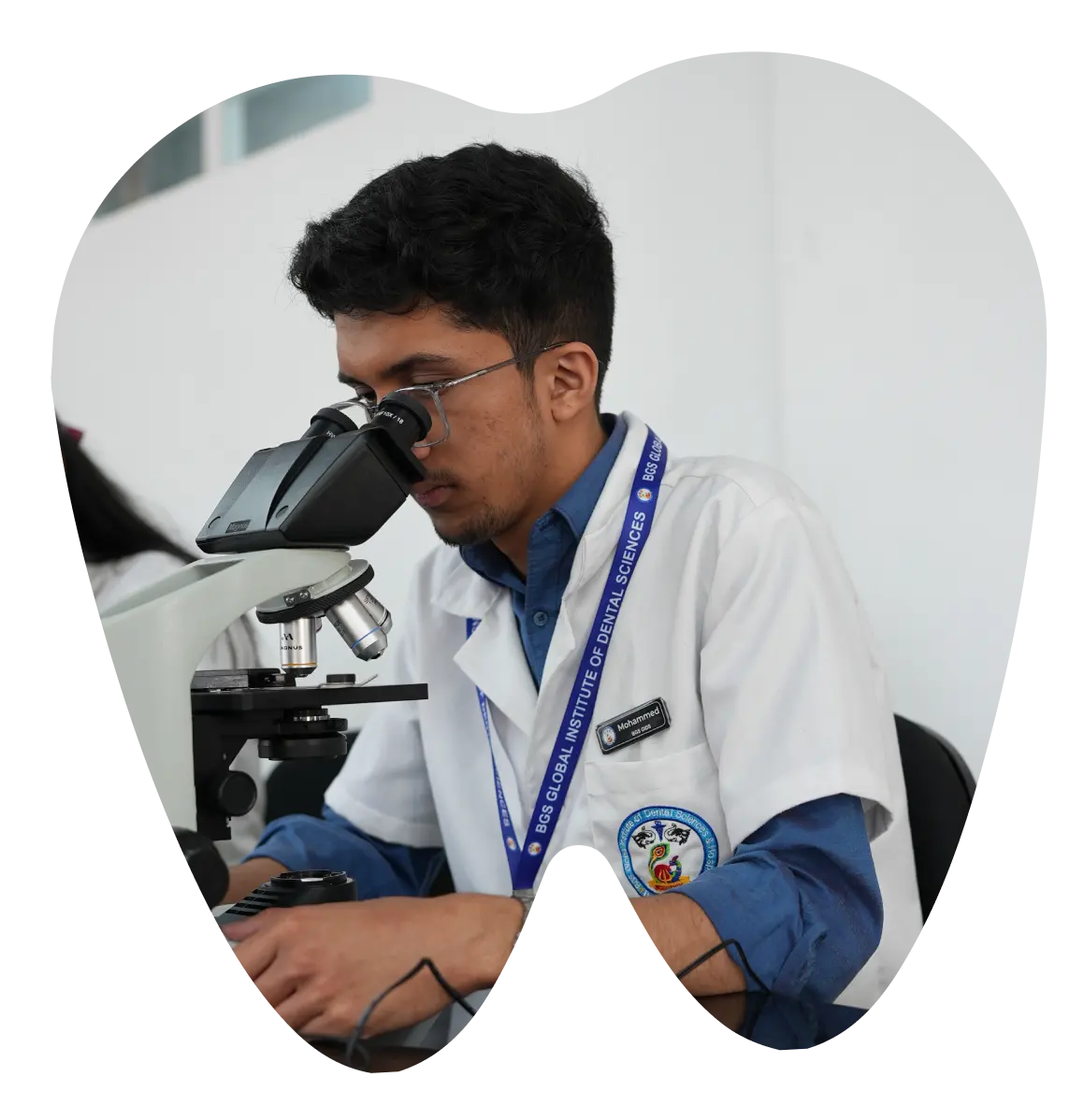
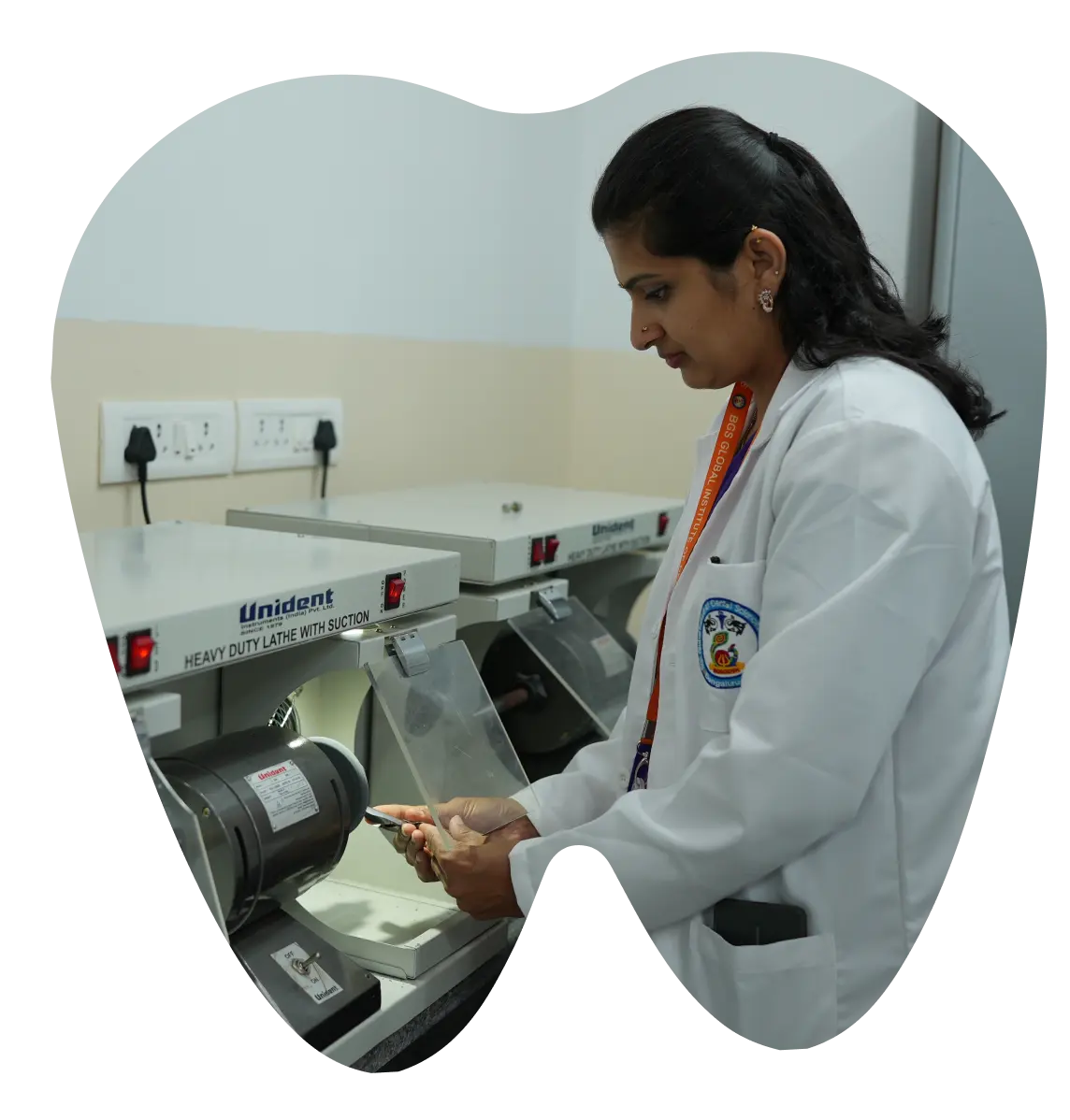
Hands-on practice in pre-clinical labs before students progress to treating real patients. Typodont and phantom head systems are used for simulation.

Clinical Training
Supervised clinical postings begin in the third year and intensify through the final year and internship. Students treat real patients across all nine departments under the guidance of experienced clinicians.

Case Presentations & Seminars
Students present clinical cases, review published literature and discuss treatment planning — developing critical thinking and communication skills essential for professional practice.

Community Dental Health Camps
Regular outreach camps are organised in nearby communities, giving students exposure to public health dentistry and underserved populations.
Skill Labs & Workshops
Periodic workshops on specific clinical skills — from digital impressions to suturing techniques — keep students current with modern dental practice.

Problem-Based Learning (PBL)
Case-based discussions that mirror real clinical challenges, encouraging students to integrate knowledge from multiple disciplines.

Research Participation
Students are encouraged to participate in ongoing faculty research projects, present papers at conferences and publish in indexed journals — building an academic culture from an early stage.

Clinical Training
Clinical training is the heart of dental education, and BGS GIDS takes it seriously. Our clinical training model is built on the principle of progressive responsibility: students begin by observing, then assist, then perform procedures under supervision, and finally demonstrate independent competence.
The BGS GIDS Dental Clinics
The BGS GIDS dental clinics are equipped with modern dental units, air-rotor handpieces, digital OPG (panoramic) X-ray machines, periapical X-ray systems, dental microscopes, and all the instruments required for undergraduate clinical practice. Each department has its own dedicated clinical space, allowing students to immerse themselves in their specific discipline while building a comprehensive clinical portfolio.
Clinical Exposure via Gleneagles BGS Hospital
The proximity of the 450-bed Gleneagles BGS Hospital on campus gives BGS GIDS students an advantage that most dental colleges cannot offer. Students have the opportunity to observe and participate in complex oral surgery cases, interact with a multidisciplinary team of specialists, and understand the broader interface between dentistry and systemic health — an increasingly important dimension of modern dental practice.
Internship
After passing the Final BDS examinations, students undergo a one-year compulsory rotating internship at the BGS GIDS clinics and associated facilities. The internship covers all nine departments and includes postings in community dental health, giving graduates the breadth of experience they need before independent practice or further specialisation.
Research & Publications
BGS GIDS is committed to building a research culture from the undergraduate level. Faculty members are actively engaged in clinical research, and students are encouraged to participate in research projects, undertake case studies and present findings at academic conferences.
Research Facilities
Access to the BGS GIMS Research Institute — a dedicated biomedical research facility on campus with qualified scientists, equipped for clinical trials and translational research.
- HELINET digital library access — enabling faculty and students to access thousands of international research journals and databases.
- Statistical analysis support for research projects.
- Ethics committee clearance support for research involving human subjects.